Field of Motion St. George, UT 2026
Commissioned by Utah Tech University
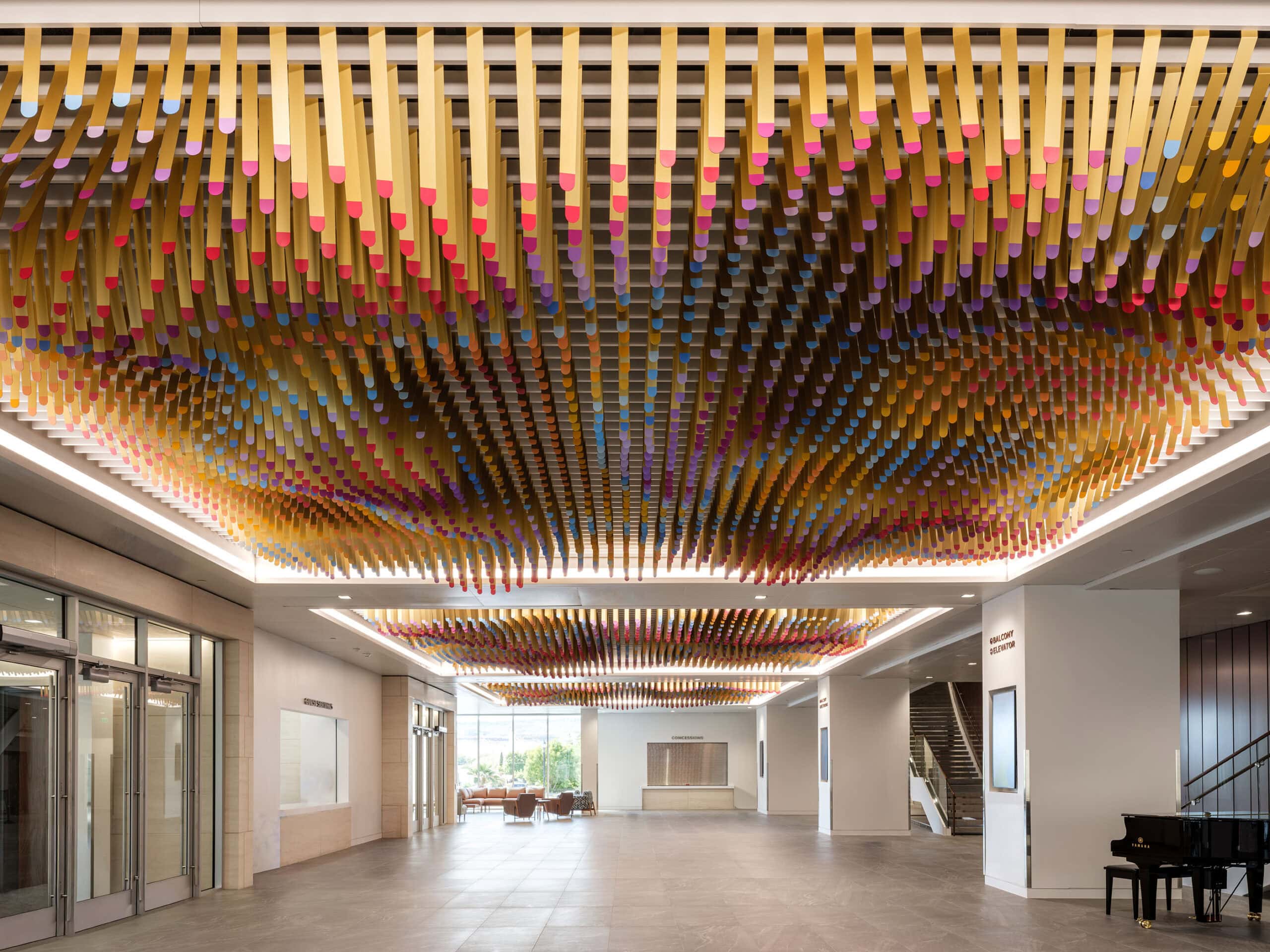
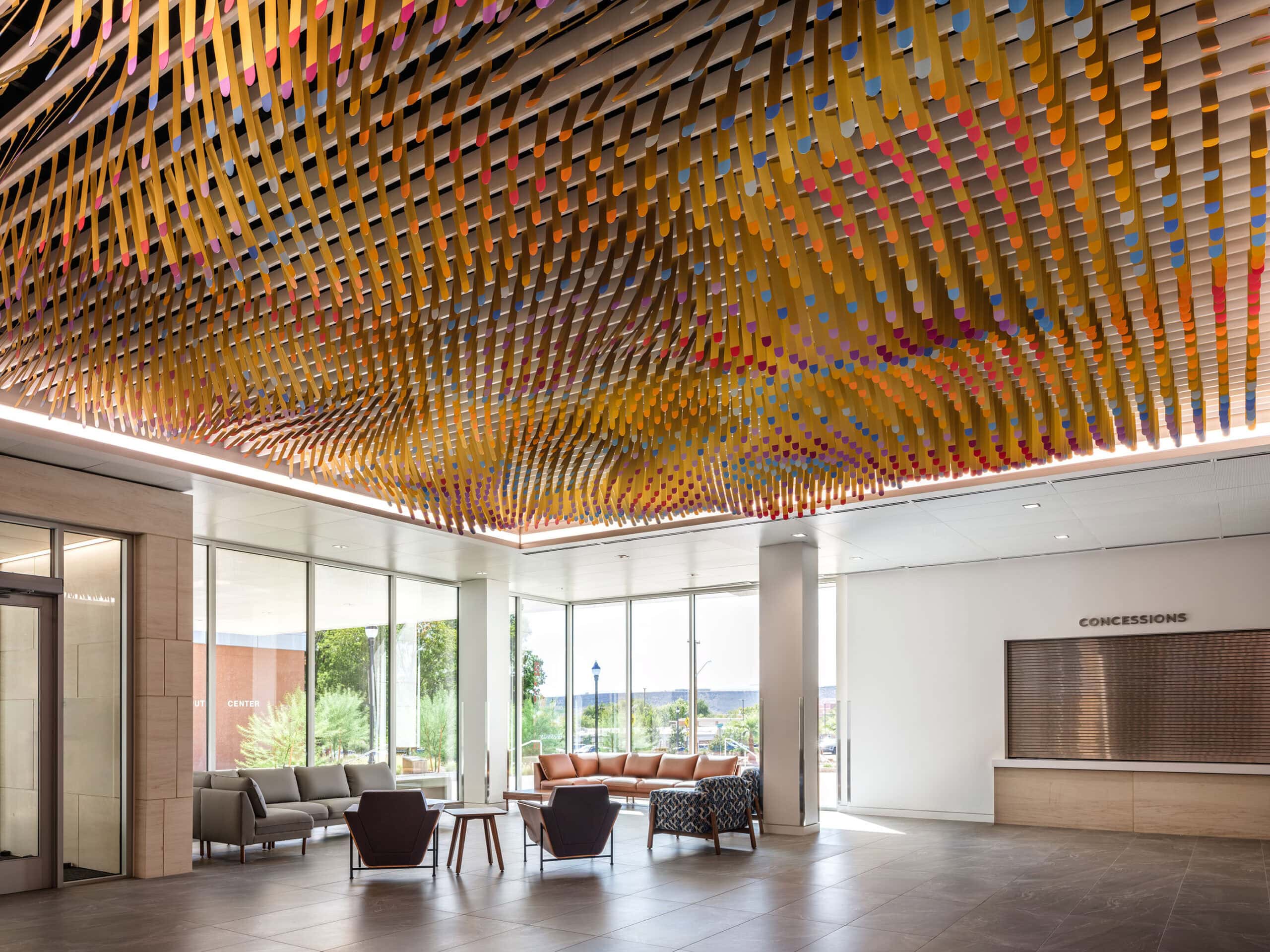
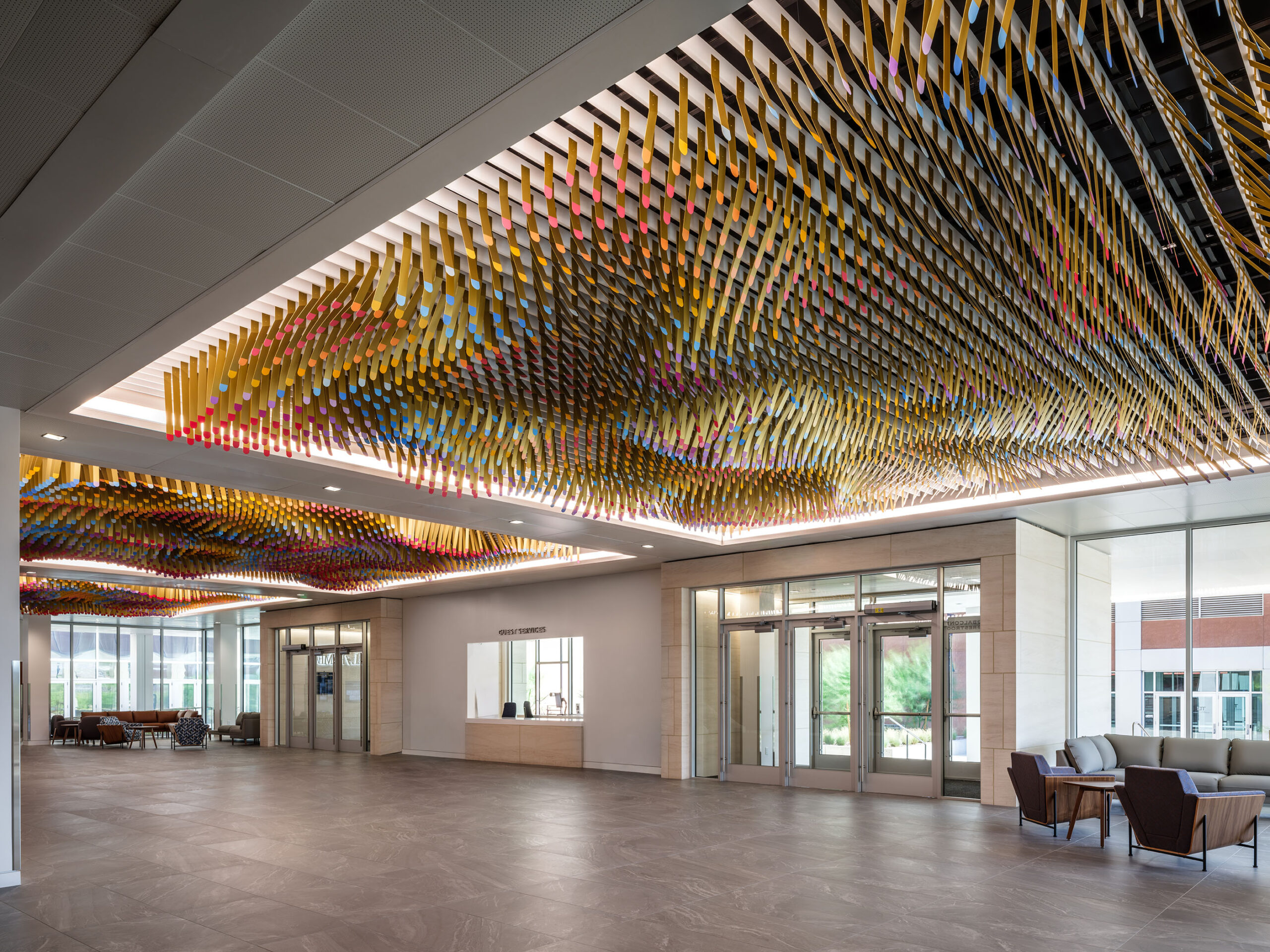
Field of Motion is a suspended installation created for the entrance lobby of the Performing Arts Center at Utah Tech University. Occupying three large recessed areas of the ceiling, the work is inspired by the movement of the performing arts and the way individual gestures come together to create a larger choreography. This sense of collective motion is connected to the landscapes surrounding St. George, where wind similarly becomes visible through the patterns it creates across sand dunes and fields of desert flowers.
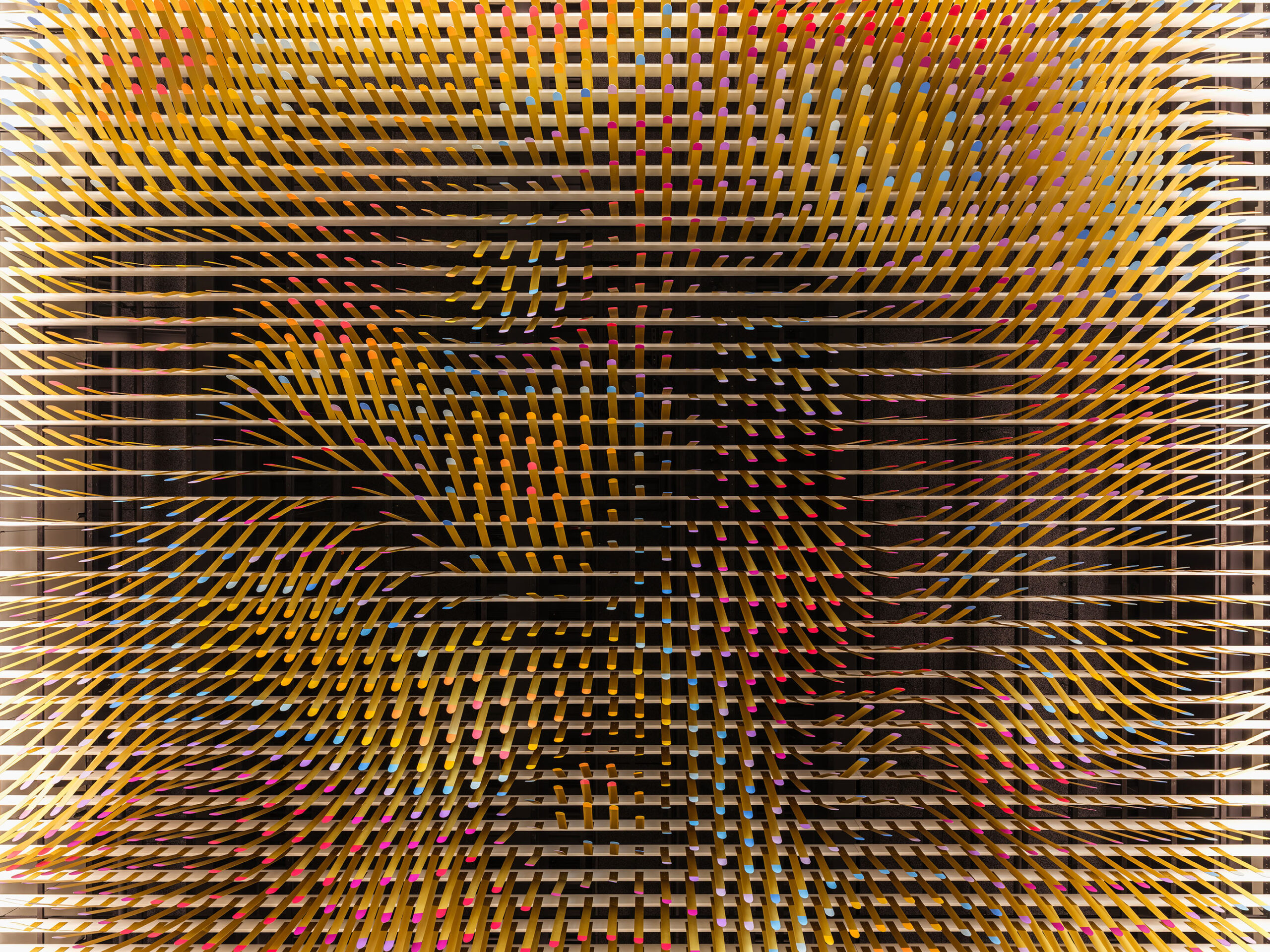
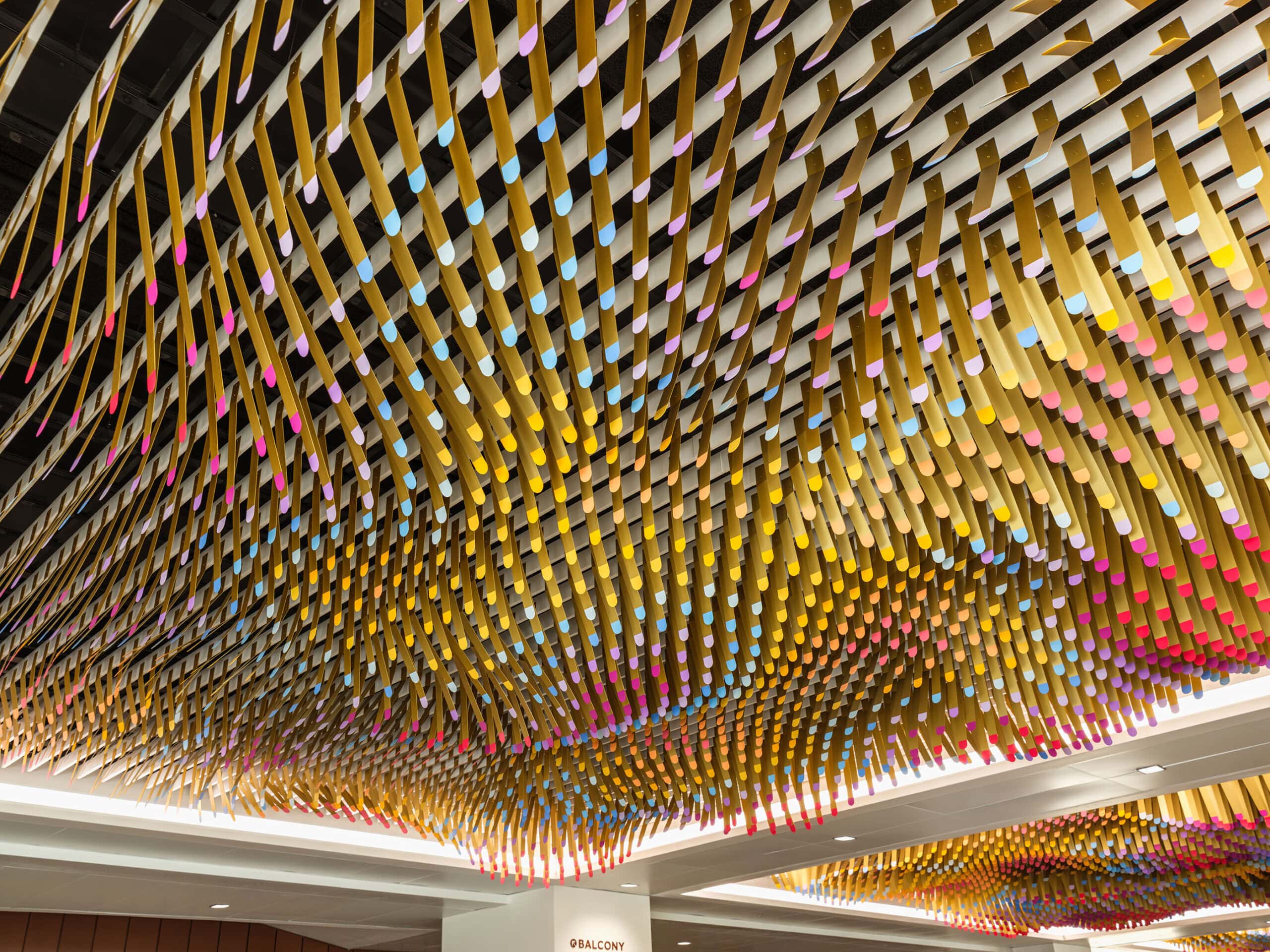
Overhead, thousands of brass fins gather into an undulating landscape that appears to shift as visitors move through the lobby. Changes in length, angle, and color produce waves, alignments, and unexpected optical patterns, giving a static material the appearance of being caught in continuous motion.
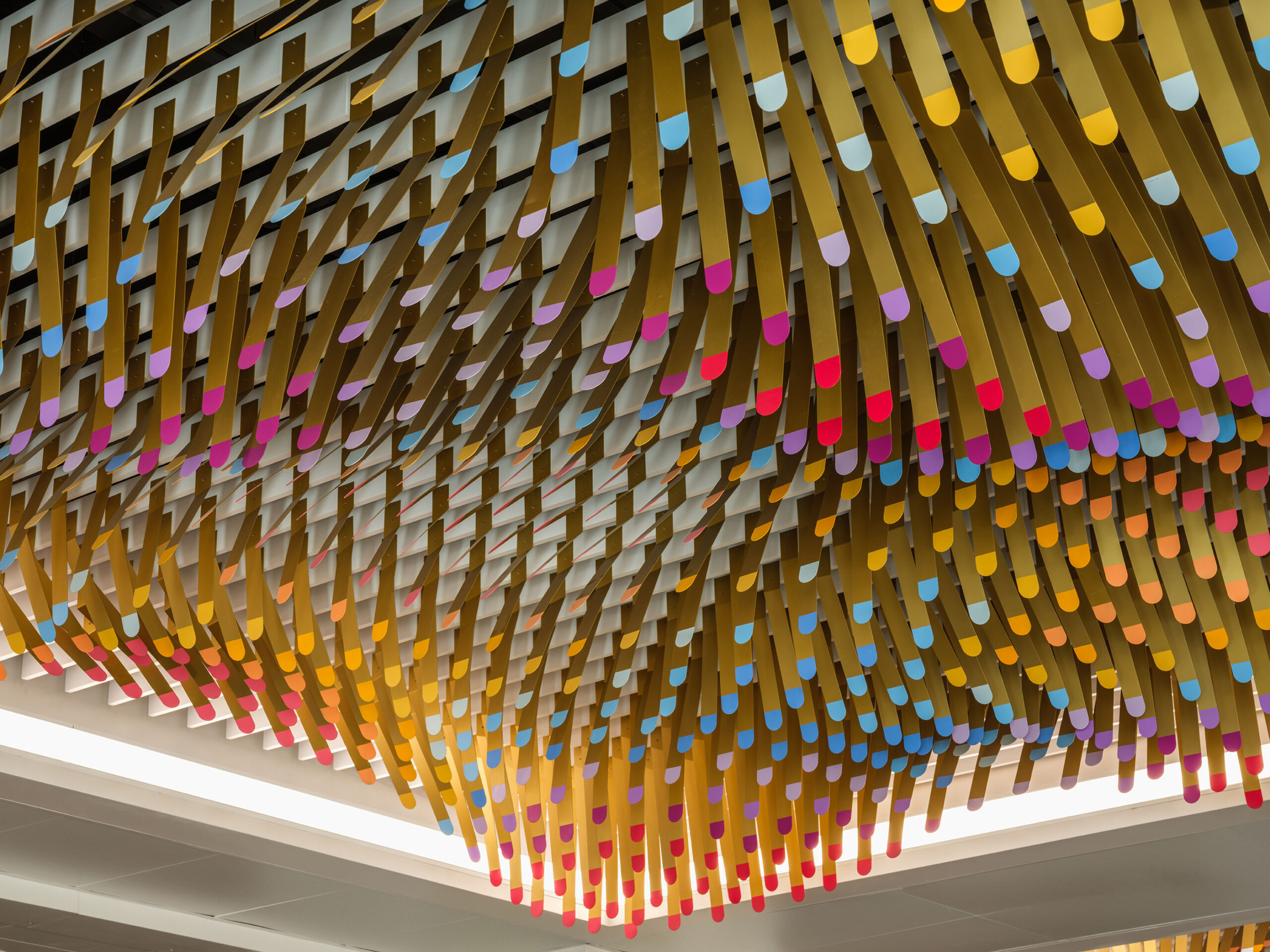
The installation is composed of approximately 6,000 individually cut and bent brass fins organized into three interconnected fields. A digital flow-field simulation determines the length and angle of each element, translating forces associated with wind, waves, and turbulence into physical geometry. Simple linear pieces accumulate into a softer, seemingly continuous surface whose patterns emerge through repetition and variation.
Color introduces a second layer of movement. The rounded tips of the brass fins are painted in a spectrum sampled from flora found in the ecoregions surrounding St. George. Their distribution is mapped through the same motion simulation that generates the geometry, allowing color and form to move together across the ceiling. From below, the field evokes flowers bending in the wind; from oblique viewpoints, individual colors overlap and separate as visitors pass beneath it.
Rather than representing movement literally, Field of Motion captures its effects. Like a performance unfolding over time or patterns left by wind across a dune, the installation makes motion perceptible through the collective behavior of many individual parts. The three fields operate as an ensemble—each distinct, but together forming a larger choreography that changes continuously through movement and perception.
Photos: Alan Tansey
Find out more about the process:
Pattern Creation
Photos of the installation