Pentagram Remixed Ningbo, CN 2017
Commisssioned by Pentagram
Movement organizes the experience from the moment visitors enter. Work unfolds room by room, requiring circulation and physical engagement to be fully understood. Rather than presenting graphic design as a static archive, the exhibition frames it as a spatial narrative discovered through walking, looking, and interacting.
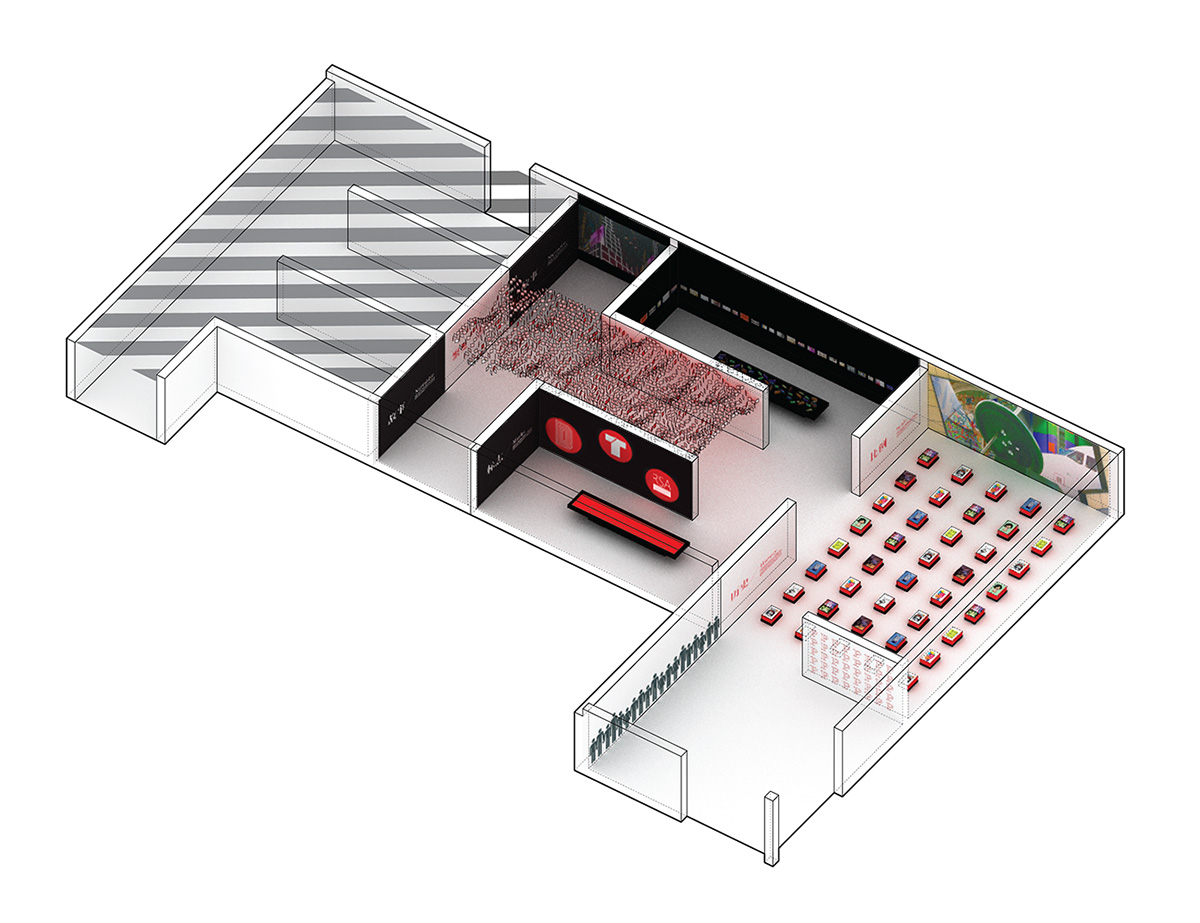
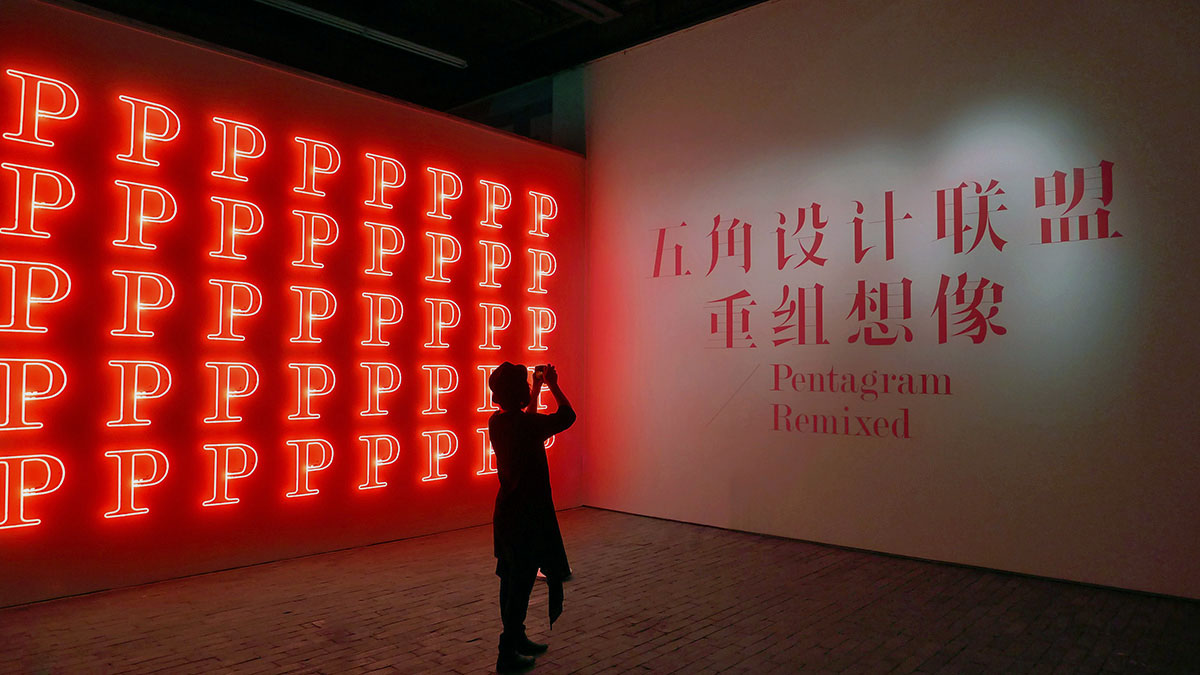
The exhibition design was developed in collaboration with Pentagram for their fortieth anniversary retrospective, presented as part of the 7th International Graphic Design Biennial at the Ningbo Museum of Art in China. The work spans multiple galleries organized around thematic lenses—History, Scale, Motion, Narrative, Marks, Print, and Diversity—creating a sequence that shifts in tempo, density, and mode of engagement.
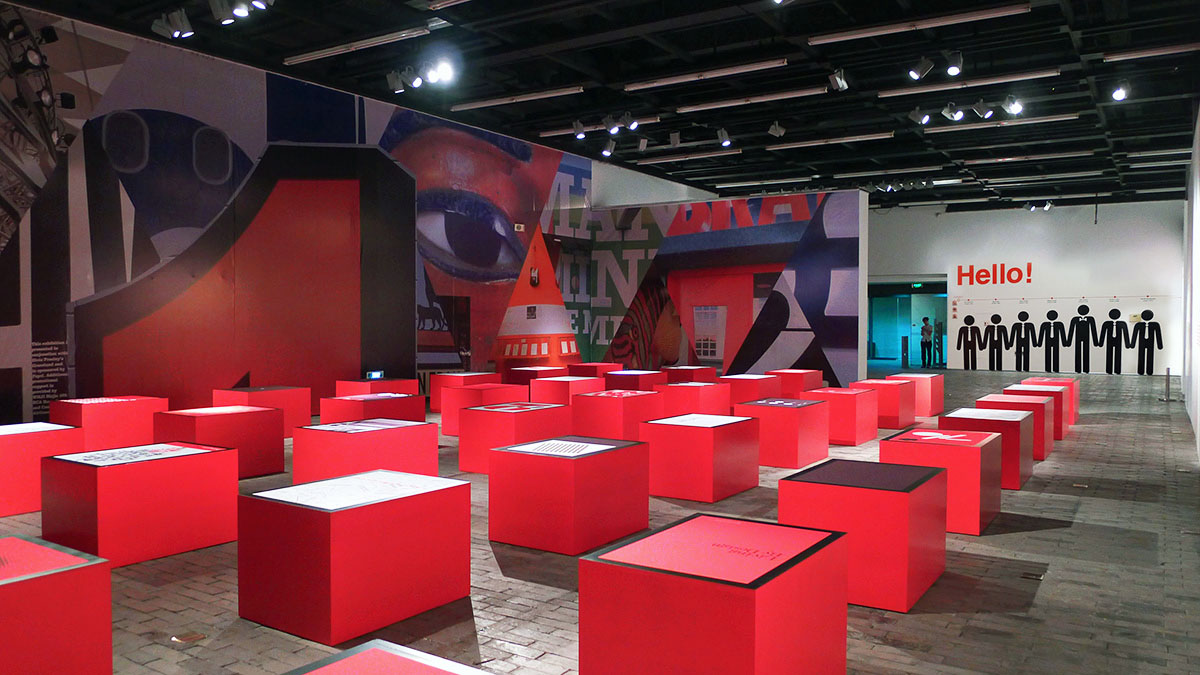
In the History and Scale galleries, forty posters are displayed horizontally on red bases in a gridded field that reads as both timeline and landscape, insisting on movement and repetition to reveal relationships across the work. Motion and Narrative occupy opposing open rooms, each anchored by a film. These spaces act as pauses within the exhibition, resetting the rhythm before visitors move into denser, object-driven galleries.
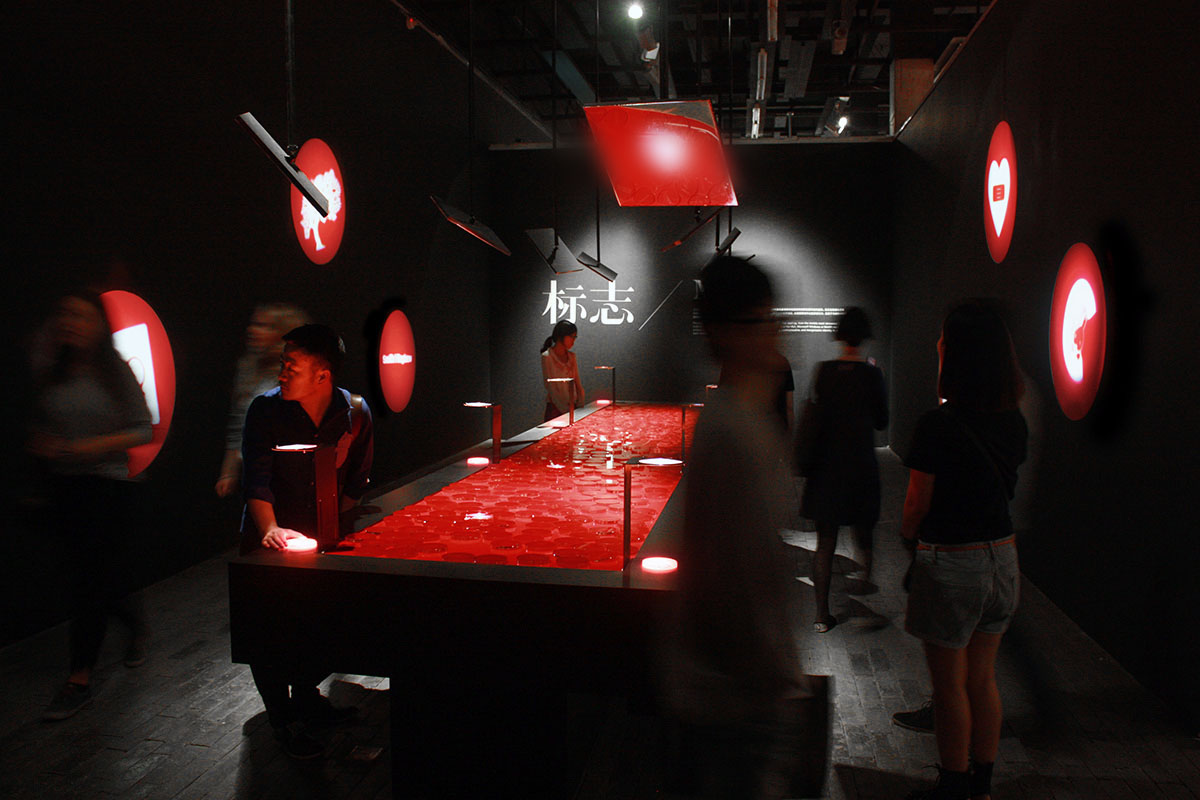
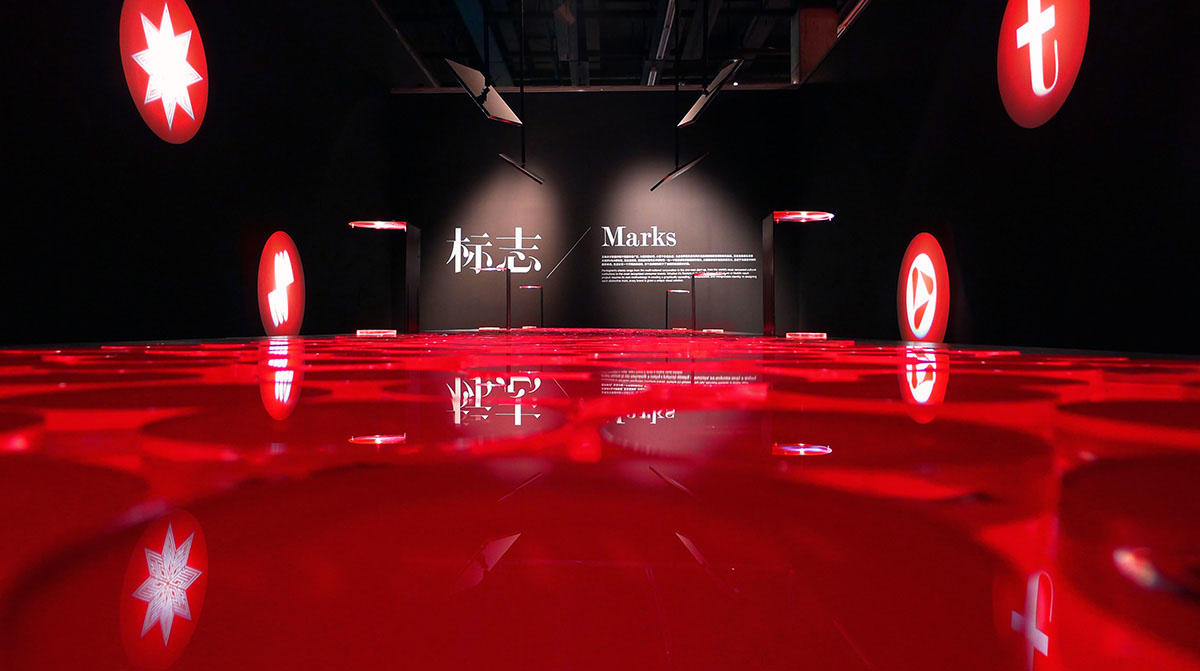
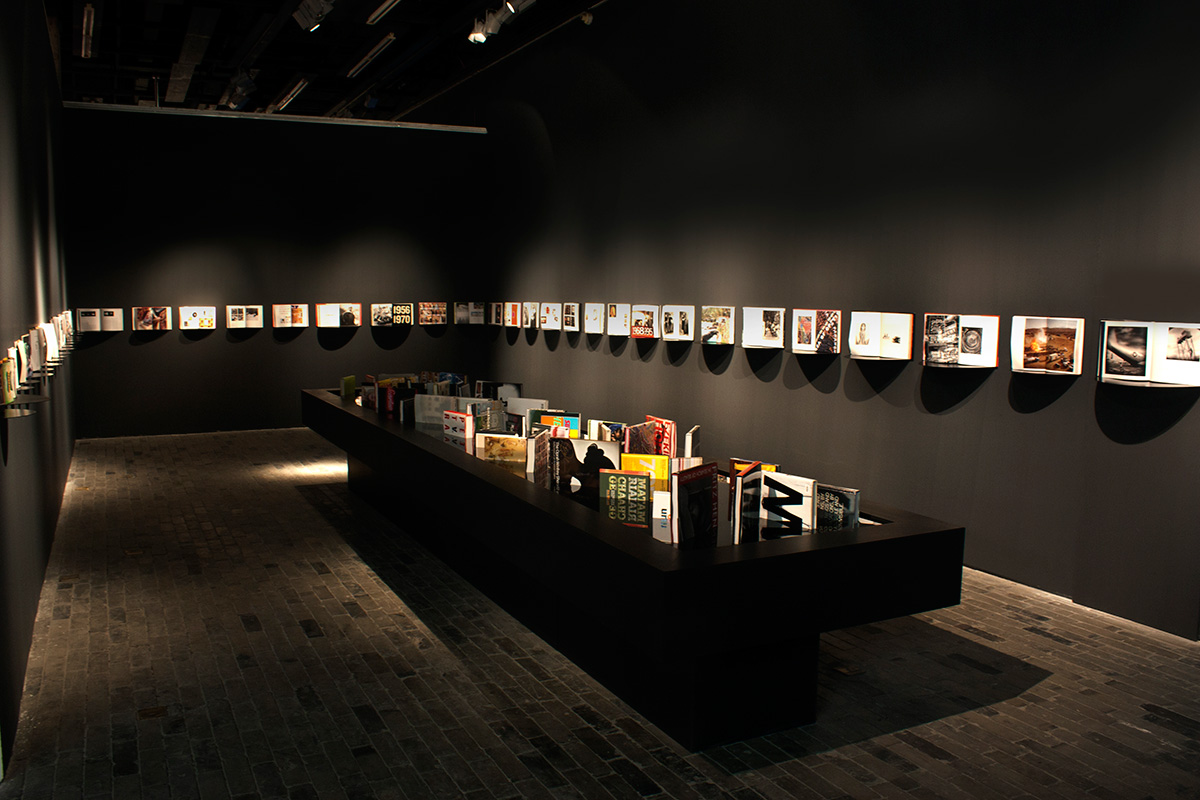
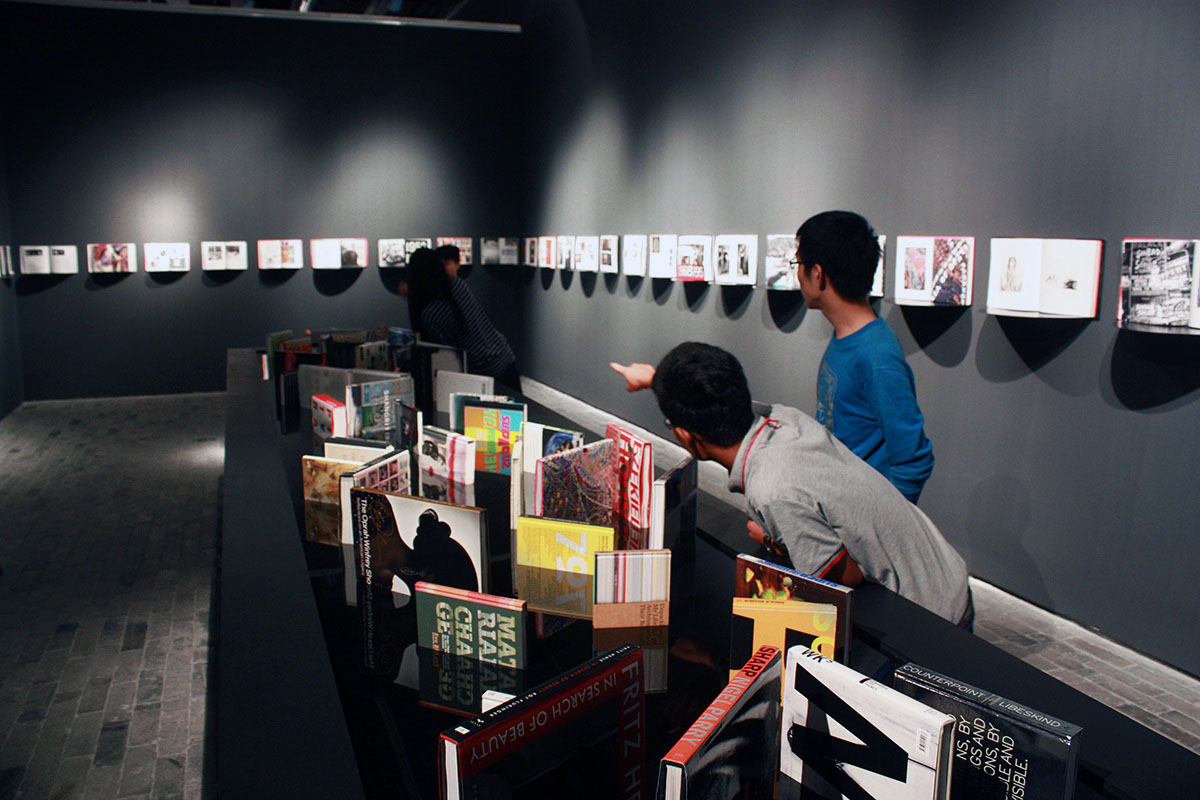
The Marks and Print rooms are symmetrically organized around long black-stained wood tables that function as exhibition interfaces. In Marks, glass discs printed with logos are placed over embedded lights, projecting symbols onto the walls and transforming the room through collective interaction. In Print, books are precisely oriented to corresponding wall-mounted material, requiring visitors to track content through space.
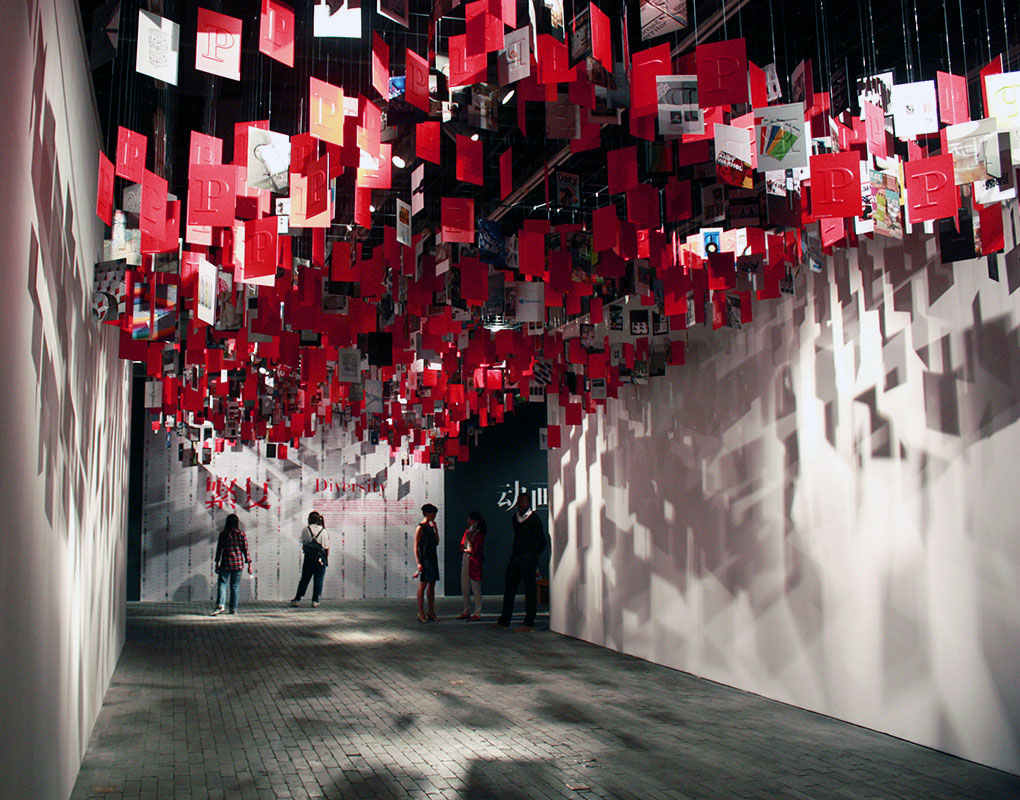
The final gallery presents Diversity as a spatialized data set. Portfolio pages printed on thin plastic sheets form a rolling, cloud-like surface generated through rankings across forty attributes. Information is encountered volumetrically rather than hierarchically, emphasizing overlap and multiplicity.
Across the exhibition, graphic design is treated as something to be navigated rather than simply viewed. Tables become interfaces, layouts demand movement, and interaction replaces didactic explanation—allowing design history to be experienced physically through sequence, scale, and participation.