Considering the Quake New York, 2014
Commissioned by Center for Archtiecture
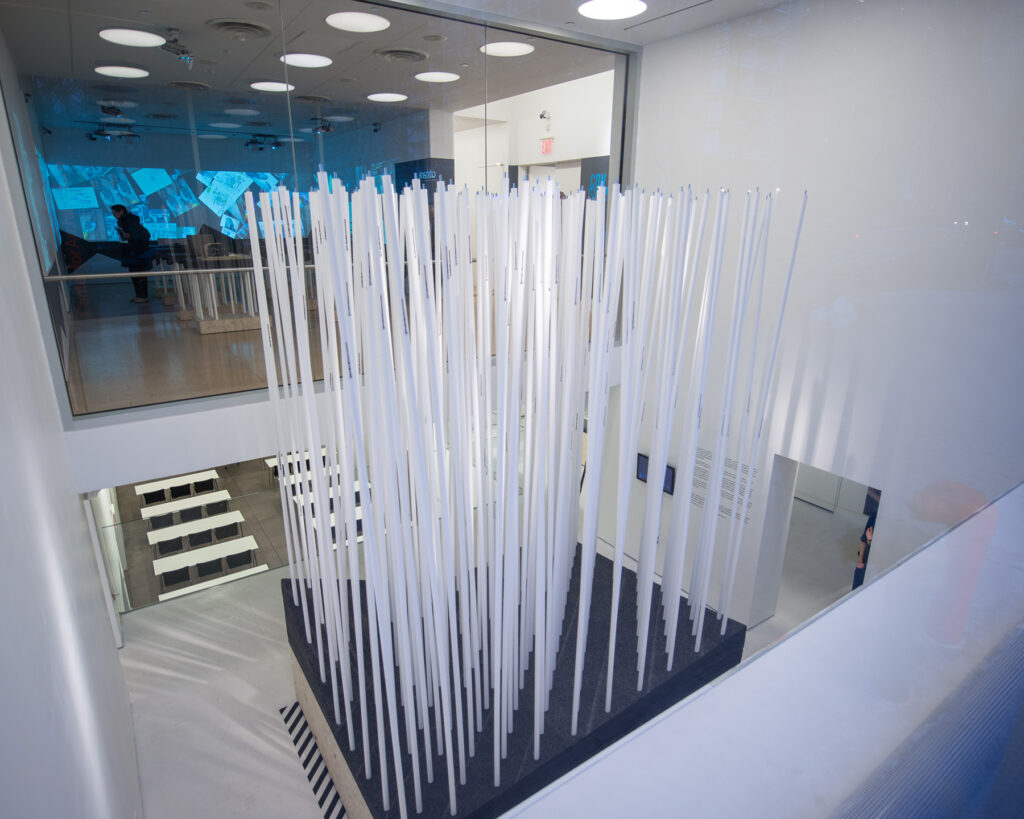
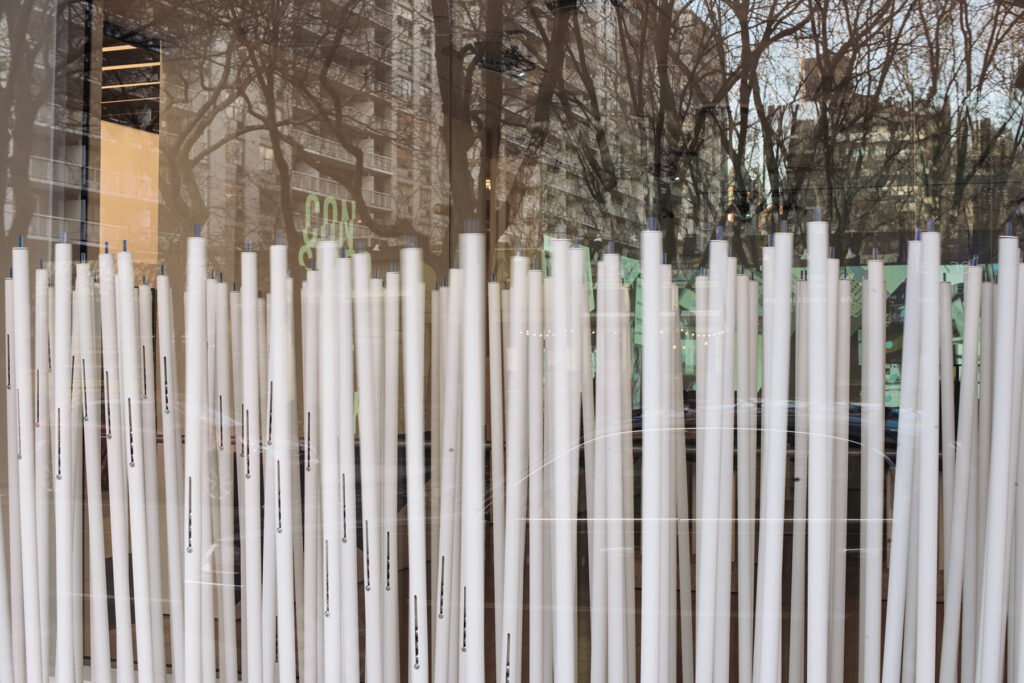
Movement becomes visible as waves travel through a field of vertical elements, rising, colliding, and dissipating across the space. By adjusting a single input, visitors watch patterns of resonance emerge and fade, making seismic forces—normally felt but unseen—tangible and intuitive.
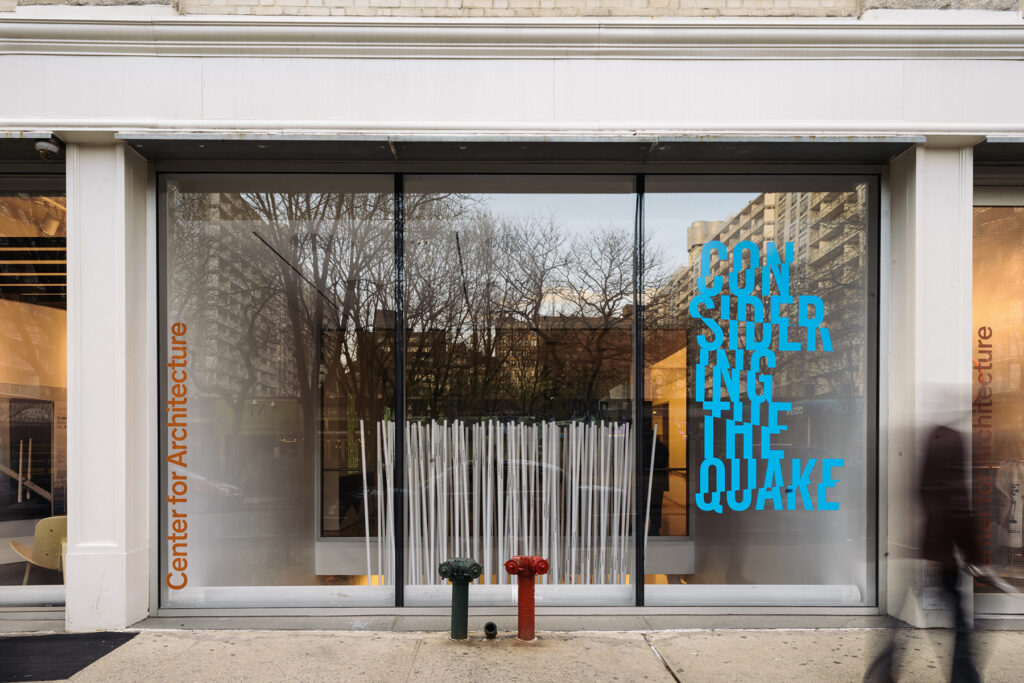
The exhibition design and installation were developed for Considering the Quake: Seismic Design on Edge when it was hosted by the American Institute of Architects at the Center for Architecture in New York, following an earlier presentation in Toronto. The project reframes earthquake design not only as a pragmatic necessity, but as a site of innovation where engineering and architecture intersect.
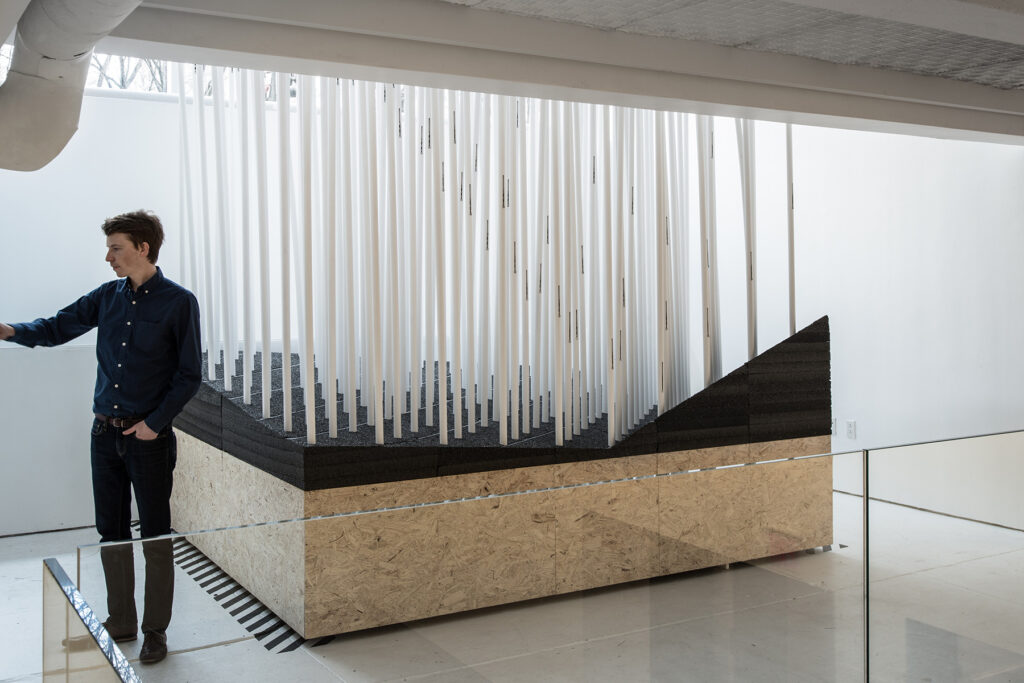
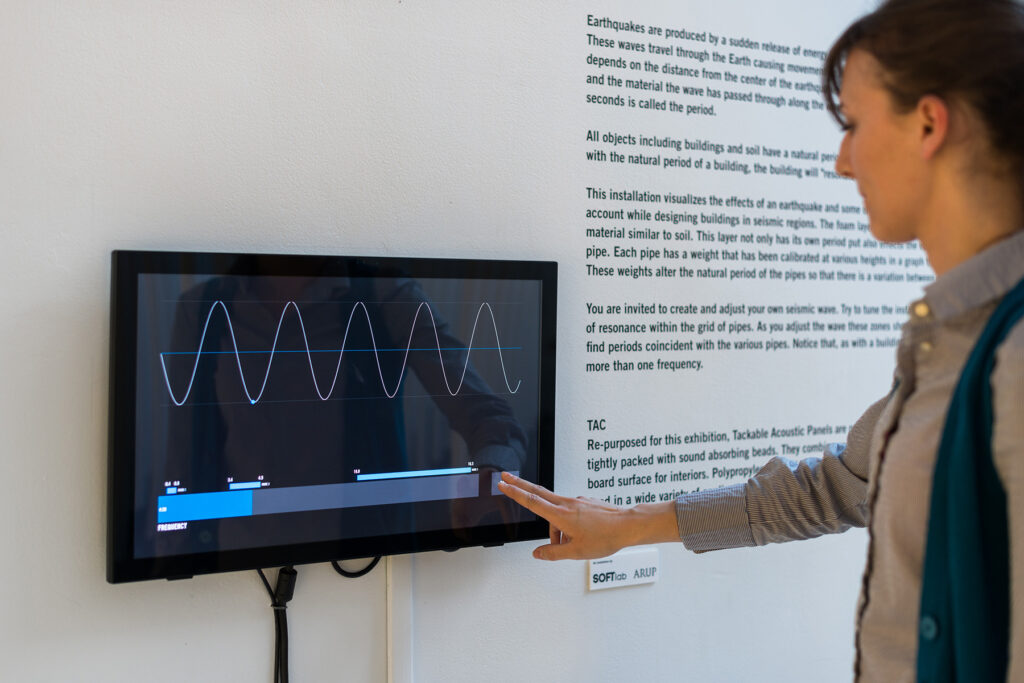
At the center of the exhibition, an interactive installation developed in collaboration with Arup invites direct physical engagement with seismic behavior. Functioning as both focal point and educational tool, the system allows visitors to explore how buildings respond differently to the same seismic event by translating abstract data into experiential learning.
The installation consists of a grid of vertical pipes, each tuned to respond uniquely to vibration. A foam layer beneath the pipes represents subsurface conditions, mimicking how soil depth and softness influence seismic response. Each pipe is weighted at a calibrated height, altering its natural period so no two elements behave exactly the same way.
Visitors generate and adjust seismic waves, tuning frequency and amplitude to observe how zones of resonance appear, shift, or dissipate across the grid. Like buildings, each pipe resonates at more than one frequency, reinforcing the complexity of seismic response. Through interaction and experimentation, the installation makes principles such as resonance, damping, and amplification legible through motion and play.
Collaborators: ARUP & Pentagram
Photos: Alan Tansey